 Add to Chrome
 Add to Firefox
 Add to Edge
fault diagnosis
Papers and Code
Drift-Bench: Diagnosing Cooperative Breakdowns in LLM Agents under Input Faults via Multi-Turn Interaction
Feb 02, 2026
As Large Language Models transition to autonomous agents, user inputs frequently violate cooperative assumptions (e.g., implicit intent, missing parameters, false presuppositions, or ambiguous expressions), creating execution risks that text-only evaluations do not capture. Existing benchmarks typically assume well-specified instructions or restrict evaluation to text-only, single-turn clarification, and thus do not measure multi-turn disambiguation under grounded execution risk. We introduce \textbf{Drift-Bench}, the first diagnostic benchmark that evaluates agentic pragmatics under input faults through multi-turn clarification across state-oriented and service-oriented execution environments. Grounded in classical theories of communication, \textbf{Drift-Bench} provides a unified taxonomy of cooperative breakdowns and employs a persona-driven user simulator with the \textbf{Rise} evaluation protocol. Experiments show substantial performance drops under these faults, with clarification effectiveness varying across user personas and fault types. \MethodName bridges clarification research and agent safety evaluation, enabling systematic diagnosis of failures that can lead to unsafe executions.

Graph-Free Root Cause Analysis
Jan 29, 2026Failures in complex systems demand rapid Root Cause Analysis (RCA) to prevent cascading damage. Existing RCA methods that operate without dependency graph typically assume that the root cause having the highest anomaly score. This assumption fails when faults propagate, as a small delay at the root cause can accumulate into a much larger anomaly downstream. In this paper, we propose PRISM, a simple and efficient framework for RCA when the dependency graph is absent. We formulate a class of component-based systems under which PRISM performs RCA with theoretical guarantees. On 735 failures across 9 real-world datasets, PRISM achieves 68% Top-1 accuracy, a 258% improvement over the best baseline, while requiring only 8ms per diagnosis.
LSR-Net: A Lightweight and Strong Robustness Network for Bearing Fault Diagnosis in Noise Environment
Jan 14, 2026Rotating bearings play an important role in modern industries, but have a high probability of occurrence of defects because they operate at high speed, high load, and poor operating environments. Therefore, if a delay time occurs when a bearing is diagnosed with a defect, this may cause economic loss and loss of life. Moreover, since the vibration sensor from which the signal is collected is highly affected by the operating environment and surrounding noise, accurate defect diagnosis in a noisy environment is also important. In this paper, we propose a lightweight and strong robustness network (LSR-Net) that is accurate in a noisy environment and enables real-time fault diagnosis. To this end, first, a denoising and feature enhancement module (DFEM) was designed to create a 3-channel 2D matrix by giving several nonlinearity to the feature-map that passed through the denoising module (DM) block composed of convolution-based denoising (CD) blocks. Moreover, adaptive pruning was applied to DM to improve denoising ability when the power of noise is strong. Second, for lightweight model design, a convolution-based efficiency shuffle (CES) block was designed using group convolution (GConv), group pointwise convolution (GPConv) and channel split that can design the model while maintaining low parameters. In addition, the trade-off between the accuracy and model computational complexity that can occur due to the lightweight design of the model was supplemented using attention mechanisms and channel shuffle. In order to verify the defect diagnosis performance of the proposed model, performance verification was conducted in a noisy environment using a vibration signal. As a result, it was confirmed that the proposed model had the best anti-noise ability compared to the benchmark models, and the computational complexity of the model was also the lowest.
Vision-Based Early Fault Diagnosis and Self-Recovery for Strawberry Harvesting Robots
Jan 05, 2026Strawberry harvesting robots faced persistent challenges such as low integration of visual perception, fruit-gripper misalignment, empty grasping, and strawberry slippage from the gripper due to insufficient gripping force, all of which compromised harvesting stability and efficiency in orchard environments. To overcome these issues, this paper proposed a visual fault diagnosis and self-recovery framework that integrated multi-task perception with corrective control strategies. At the core of this framework was SRR-Net, an end-to-end multi-task perception model that simultaneously performed strawberry detection, segmentation, and ripeness estimation, thereby unifying visual perception with fault diagnosis. Based on this integrated perception, a relative error compensation method based on the simultaneous target-gripper detection was designed to address positional misalignment, correcting deviations when error exceeded the tolerance threshold. To mitigate empty grasping and fruit-slippage faults, an early abort strategy was implemented. A micro-optical camera embedded in the end-effector provided real-time visual feedback, enabling grasp detection during the deflating stage and strawberry slip prediction during snap-off through MobileNet V3-Small classifier and a time-series LSTM classifier. Experiments demonstrated that SRR-Net maintained high perception accuracy. For detection, it achieved a precision of 0.895 and recall of 0.813 on strawberries, and 0.972/0.958 on hands. In segmentation, it yielded a precision of 0.887 and recall of 0.747 for strawberries, and 0.974/0.947 for hands. For ripeness estimation, SRR-Net attained a mean absolute error of 0.035, while simultaneously supporting multi-task perception and sustaining a competitive inference speed of 163.35 FPS.
Multi-modal cross-domain mixed fusion model with dual disentanglement for fault diagnosis under unseen working conditions
Dec 31, 2025Intelligent fault diagnosis has become an indispensable technique for ensuring machinery reliability. However, existing methods suffer significant performance decline in real-world scenarios where models are tested under unseen working conditions, while domain adaptation approaches are limited to their reliance on target domain samples. Moreover, most existing studies rely on single-modal sensing signals, overlooking the complementary nature of multi-modal information for improving model generalization. To address these limitations, this paper proposes a multi-modal cross-domain mixed fusion model with dual disentanglement for fault diagnosis. A dual disentanglement framework is developed to decouple modality-invariant and modality-specific features, as well as domain-invariant and domain-specific representations, enabling both comprehensive multi-modal representation learning and robust domain generalization. A cross-domain mixed fusion strategy is designed to randomly mix modality information across domains for modality and domain diversity augmentation. Furthermore, a triple-modal fusion mechanism is introduced to adaptively integrate multi-modal heterogeneous information. Extensive experiments are conducted on induction motor fault diagnosis under both unseen constant and time-varying working conditions. The results demonstrate that the proposed method consistently outperforms advanced methods and comprehensive ablation studies further verify the effectiveness of each proposed component and multi-modal fusion. The code is available at: https://github.com/xiapc1996/MMDG.
BatteryAgent: Synergizing Physics-Informed Interpretation with LLM Reasoning for Intelligent Battery Fault Diagnosis
Dec 31, 2025Fault diagnosis of lithium-ion batteries is critical for system safety. While existing deep learning methods exhibit superior detection accuracy, their "black-box" nature hinders interpretability. Furthermore, restricted by binary classification paradigms, they struggle to provide root cause analysis and maintenance recommendations. To address these limitations, this paper proposes BatteryAgent, a hierarchical framework that integrates physical knowledge features with the reasoning capabilities of Large Language Models (LLMs). The framework comprises three core modules: (1) A Physical Perception Layer that utilizes 10 mechanism-based features derived from electrochemical principles, balancing dimensionality reduction with physical fidelity; (2) A Detection and Attribution Layer that employs Gradient Boosting Decision Trees and SHAP to quantify feature contributions; and (3) A Reasoning and Diagnosis Layer that leverages an LLM as the agent core. This layer constructs a "numerical-semantic" bridge, combining SHAP attributions with a mechanism knowledge base to generate comprehensive reports containing fault types, root cause analysis, and maintenance suggestions. Experimental results demonstrate that BatteryAgent effectively corrects misclassifications on hard boundary samples, achieving an AUROC of 0.986, which significantly outperforms current state-of-the-art methods. Moreover, the framework extends traditional binary detection to multi-type interpretable diagnosis, offering a new paradigm shift from "passive detection" to "intelligent diagnosis" for battery safety management.
Bio-inspired Agentic Self-healing Framework for Resilient Distributed Computing Continuum Systems
Jan 01, 2026Human biological systems sustain life through extraordinary resilience, continually detecting damage, orchestrating targeted responses, and restoring function through self-healing. Inspired by these capabilities, this paper introduces ReCiSt, a bio-inspired agentic self-healing framework designed to achieve resilience in Distributed Computing Continuum Systems (DCCS). Modern DCCS integrate heterogeneous computing resources, ranging from resource-constrained IoT devices to high-performance cloud infrastructures, and their inherent complexity, mobility, and dynamic operating conditions expose them to frequent faults that disrupt service continuity. These challenges underscore the need for scalable, adaptive, and self-regulated resilience strategies. ReCiSt reconstructs the biological phases of Hemostasis, Inflammation, Proliferation, and Remodeling into the computational layers Containment, Diagnosis, Meta-Cognitive, and Knowledge for DCCS. These four layers perform autonomous fault isolation, causal diagnosis, adaptive recovery, and long-term knowledge consolidation through Language Model (LM)-powered agents. These agents interpret heterogeneous logs, infer root causes, refine reasoning pathways, and reconfigure resources with minimal human intervention. The proposed ReCiSt framework is evaluated on public fault datasets using multiple LMs, and no baseline comparison is included due to the scarcity of similar approaches. Nevertheless, our results, evaluated under different LMs, confirm ReCiSt's self-healing capabilities within tens of seconds with minimum of 10% of agent CPU usage. Our results also demonstrated depth of analysis to over come uncertainties and amount of micro-agents invoked to achieve resilience.
A Weak Signal Learning Dataset and Its Baseline Method
Dec 29, 2025Weak signal learning (WSL) is a common challenge in many fields like fault diagnosis, medical imaging, and autonomous driving, where critical information is often masked by noise and interference, making feature identification difficult. Even in tasks with abundant strong signals, the key to improving model performance often lies in effectively extracting weak signals. However, the lack of dedicated datasets has long constrained research. To address this, we construct the first specialized dataset for weak signal feature learning, containing 13,158 spectral samples. It features low SNR dominance (over 55% samples with SNR below 50) and extreme class imbalance (class ratio up to 29:1), providing a challenging benchmark for classification and regression in weak signal scenarios. We also propose a dual-view representation (vector + time-frequency map) and a PDVFN model tailored to low SNR, distribution skew, and dual imbalance. PDVFN extracts local sequential features and global frequency-domain structures in parallel, following principles of local enhancement, sequential modeling, noise suppression, multi-scale capture, frequency extraction, and global perception. This multi-source complementarity enhances representation for low-SNR and imbalanced data, offering a novel solution for WSL tasks like astronomical spectroscopy. Experiments show our method achieves higher accuracy and robustness in handling weak signals, high noise, and extreme class imbalance, especially in low SNR and imbalanced scenarios. This study provides a dedicated dataset, a baseline model, and establishes a foundation for future WSL research.
Digital Twin-Driven Zero-Shot Fault Diagnosis of Axial Piston Pumps Using Fluid-Borne Noise Signals
Dec 22, 2025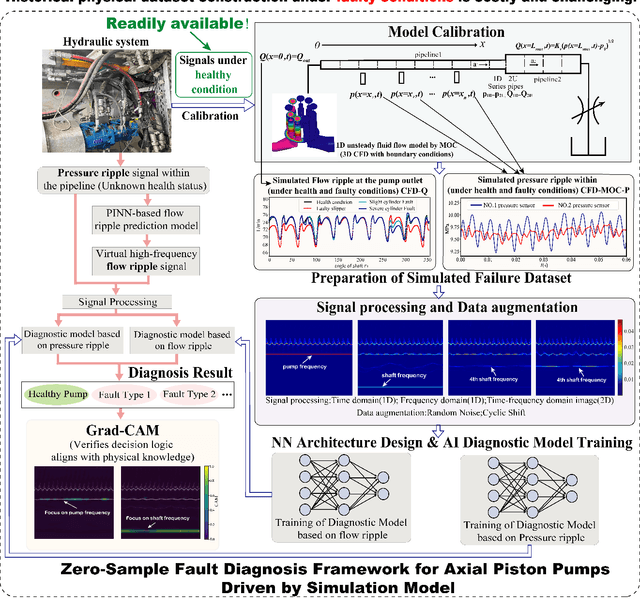
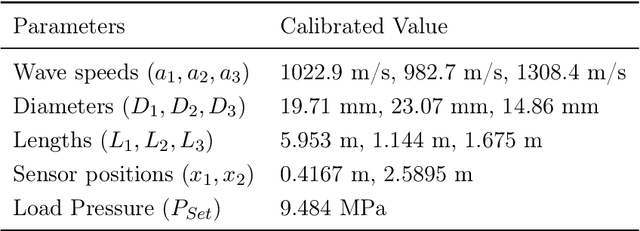
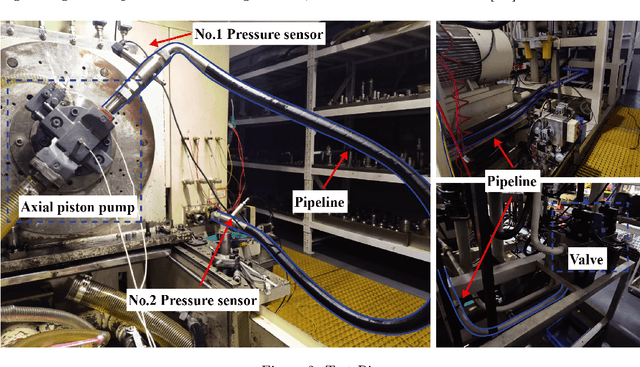
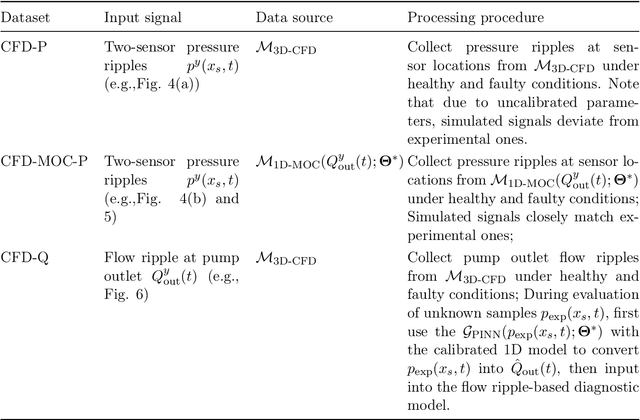
Axial piston pumps are crucial components in fluid power systems, where reliable fault diagnosis is essential for ensuring operational safety and efficiency. Traditional data-driven methods require extensive labeled fault data, which is often impractical to obtain, while model-based approaches suffer from parameter uncertainties. This paper proposes a digital twin (DT)-driven zero-shot fault diagnosis framework utilizing fluid-borne noise (FBN) signals. The framework calibrates a high-fidelity DT model using only healthy-state data, generates synthetic fault signals for training deep learning classifiers, and employs a physics-informed neural network (PINN) as a virtual sensor for flow ripple estimation. Gradient-weighted class activation mapping (Grad-CAM) is integrated to visualize the decision-making process of neural networks, revealing that large kernels matching the subsequence length in time-domain inputs and small kernels in time-frequency domain inputs enable higher diagnostic accuracy by focusing on physically meaningful features. Experimental validations demonstrate that training on signals from the calibrated DT model yields diagnostic accuracies exceeding 95\% on real-world benchmarks, while uncalibrated models result in significantly lower performance, highlighting the framework's effectiveness in data-scarce scenarios.
Fault Diagnosis and Quantification for Photovoltaic Arrays based on Differentiable Physical Models
Dec 18, 2025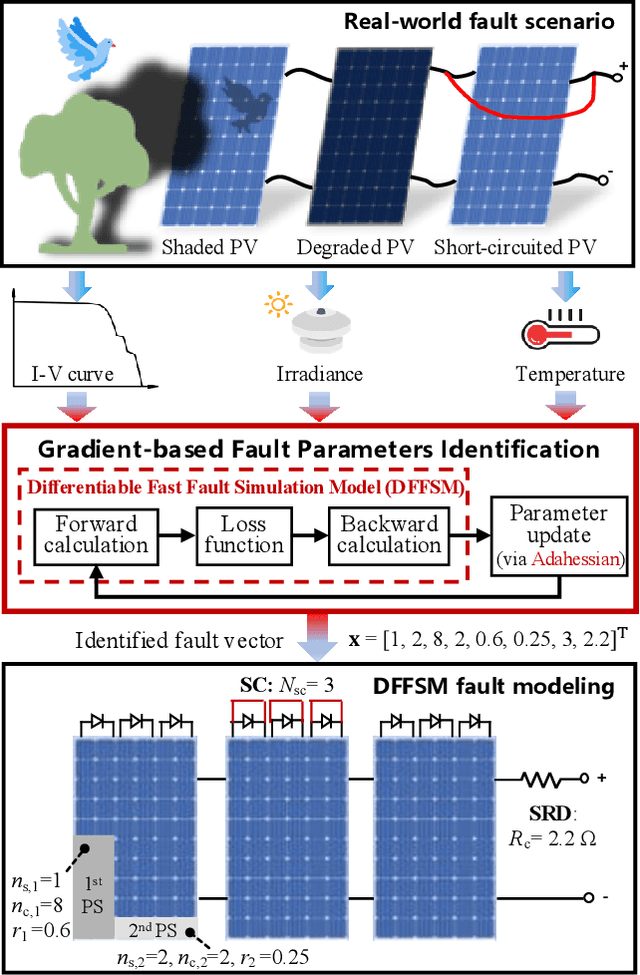
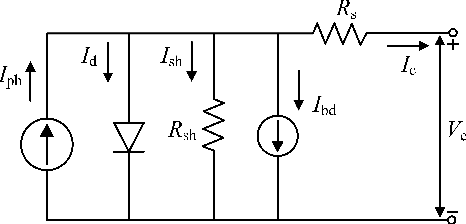
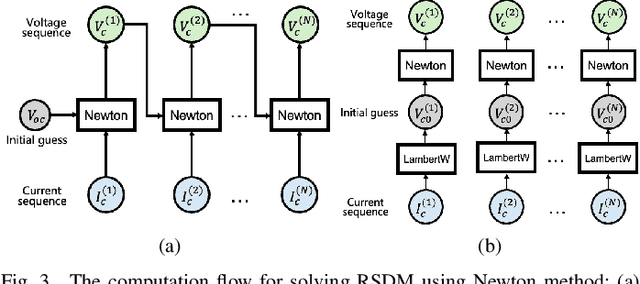
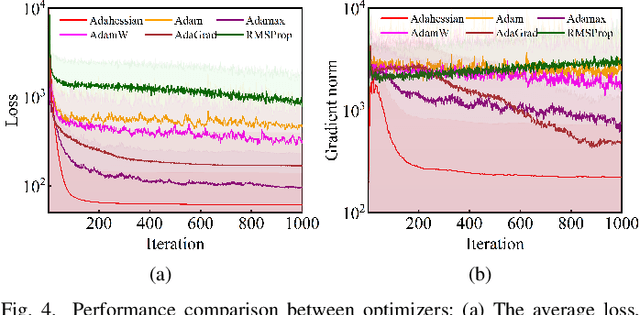
Accurate fault diagnosis and quantification are essential for the reliable operation and intelligent maintenance of photovoltaic (PV) arrays. However, existing fault quantification methods often suffer from limited efficiency and interpretability. To address these challenges, this paper proposes a novel fault quantification approach for PV strings based on a differentiable fast fault simulation model (DFFSM). The proposed DFFSM accurately models I-V characteristics under multiple faults and provides analytical gradients with respect to fault parameters. Leveraging this property, a gradient-based fault parameters identification (GFPI) method using the Adahessian optimizer is developed to efficiently quantify partial shading, short-circuit, and series-resistance degradation. Experimental results on both simulated and measured I-V curves demonstrate that the proposed GFPI achieves high quantification accuracy across different faults, with the I-V reconstruction error below 3%, confirming the feasibility and effectiveness of the application of differentiable physical simulators for PV system fault diagnosis.